

May Garden Update - The Horse Shoe Farm
From the garden desk of Ian Ibarra
The Garden
As we progress through the month of May, we are entering full spring production mode. All of the produce that I told everyone wasn’t ready yet back in March, is now becoming available. Some spring crops that are in peak production right now include Radish, Hakurei Turnips, Mixed Greens (lettuce, mizuna, beets, spinach, arugula, chard, collards), Scallions, Chinese Cabbage, and more. Other spring crops, like Sugar Snap Peas and Carrots, are beginning to produce as we hit late spring.
Since we are in a seasonal transition, this is a unique time where we are both harvesting mature spring crops, and simultaneously planting summer crops. You may see small bean sprouts in between 2 rows of radishes - which is a perfect example of how I utilize and maximize our growing space on a small-scale farm operation. As the radishes mature, the beans will grow and replace them as we get deeper into summer.
Quick producing crops, like Cilantro and Dill, are being planted once every 2 weeks for continuous production. Cilantro and Dill are also known to “bolt.” If anyone is unfamiliar with “bolting” - it is when a plant that is grown for its leaves begins to produce flowers. When a plant makes flowers, the chemistry of their leaves changes and they become less palatable. This is why people usually avoid eating produce like “bolted lettuce” because it is bitter. Spring crops will be available (depending on the crop) right through the end of June, with some continuing all season (Collards, Chard). Starting on July 1st, Jewel and I will be transitioning into Autumn mode in the garden. This includes starting trays of fall produce, or direct sowing them around summer produce.
Curious what we will be growing this summer? Besides the classic summer garden staples, like tomatoes and peppers, we are also growing some more unique crops. I am very excited to be growing Hibiscus for the property this year, and hope to split harvests between the restaurant and the spa. Hibiscus is a phenomenal crop (serving as a fruit, vegetable, and herb), originating in Africa, that has been appreciated in warm climates across the globe. When I harvest hibiscus, I am not harvesting the flowers or the fruits. I am actually harvesting the calyx, or protective layer (red) around the fruit (green). I will show a picture below. Hibiscus will be planted in the next couple of weeks.
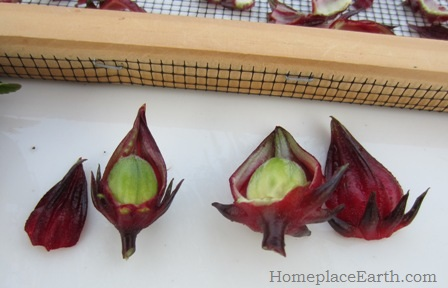
Hibiscus fruits
Green, globe structure) surrounded by the calyx (red, pointed structure). The red portion is what is used in teas/as a cranberry substitute. Source: HomeplaceEarth.com
We are also growing peanuts, okra, butternut squash, luffa, sweet potatoes, and more this summer. I am also super excited to be growing ginger this summer, which I started at my house back in January. If you have any questions about what I am growing this summer I will attach my 2026 grow list, as I do with every email. You can also peek into fall if you’re interested.
Native Crop Highlight
I will be using these emails to highlight a native crop we are growing on property moving forward. This is to dive deeper into my role as an educator here, and begin compiling educational resources for the Farm to pull from. Native crops are also a unique piece of THSF that set us apart from other farm-to-table operations. To explain the basics, “native” means that the plant grew here before human contact/coevolved with the local wildlife. And a “crop” means we are cultivating a plant for our own use. So when we emphasize native crops, we are emphasizing that they support us as people, while simultaneously supporting the environment they have always been a part of.
This week, I am highlighting Purple Passionflower. Purple Passionflower (Passiflora incarnata) is a vining, climbing plant that is native to the Southeastern USA. Passionflower species are typically found in warmer climates (think central or south america), however this species is one of the few that can be found growing wild in North America.
Purple Passionflower is an absolute powerhouse when it comes to plants that can support EVERYONE. If we start off from an anthropogenic lens, this plant provides food, medicine, ornamental beauty, and sleep. Passionflower produces edible fruits in autumn (commonly known as “maypops”) that taste like a tangier, more citrus-y version of the classic passionfruit. You can also harvest/dry the above ground parts (leaves, stems, flowers) to make potent sleep-aid/anti-stress medicine. Passionflower contains chemicals that increase GABA in our brain, which is a natural stress relief. GABA is also released while we rest, meaning passionflower helps many people sleep. It also has an incredible, edible, alien looking flower that can attract carpenter bees away from wooden structures and makes them sleepy (you will see bees sleeping in the flowers). Passionflower is also the host for the Gulf Fritillary butterfly, which is a species of butterfly whose caterpillars ONLY feed on passionflower foliage. I could go on & on about this plant, but I think I got my point across.
I am able to acquire these plants either from my home garden, or being connected into the local plant world. As a Warren Wilson alumni, I knew that Passionflower grows as a weed on the campus. Through my connections, I was able to duplicate these wonderful, supportive plants, and will continue to do so as a part of my position with the Farm. Since these plants are propagated efficiently, and on a small scale, they will take time to mature once they are planted. Purple Passionflower was planted on our fenceline this past week, so I don’t expect it to heavily produce fruit until next Autumn. As new plants are added into our collection, I will let people know.
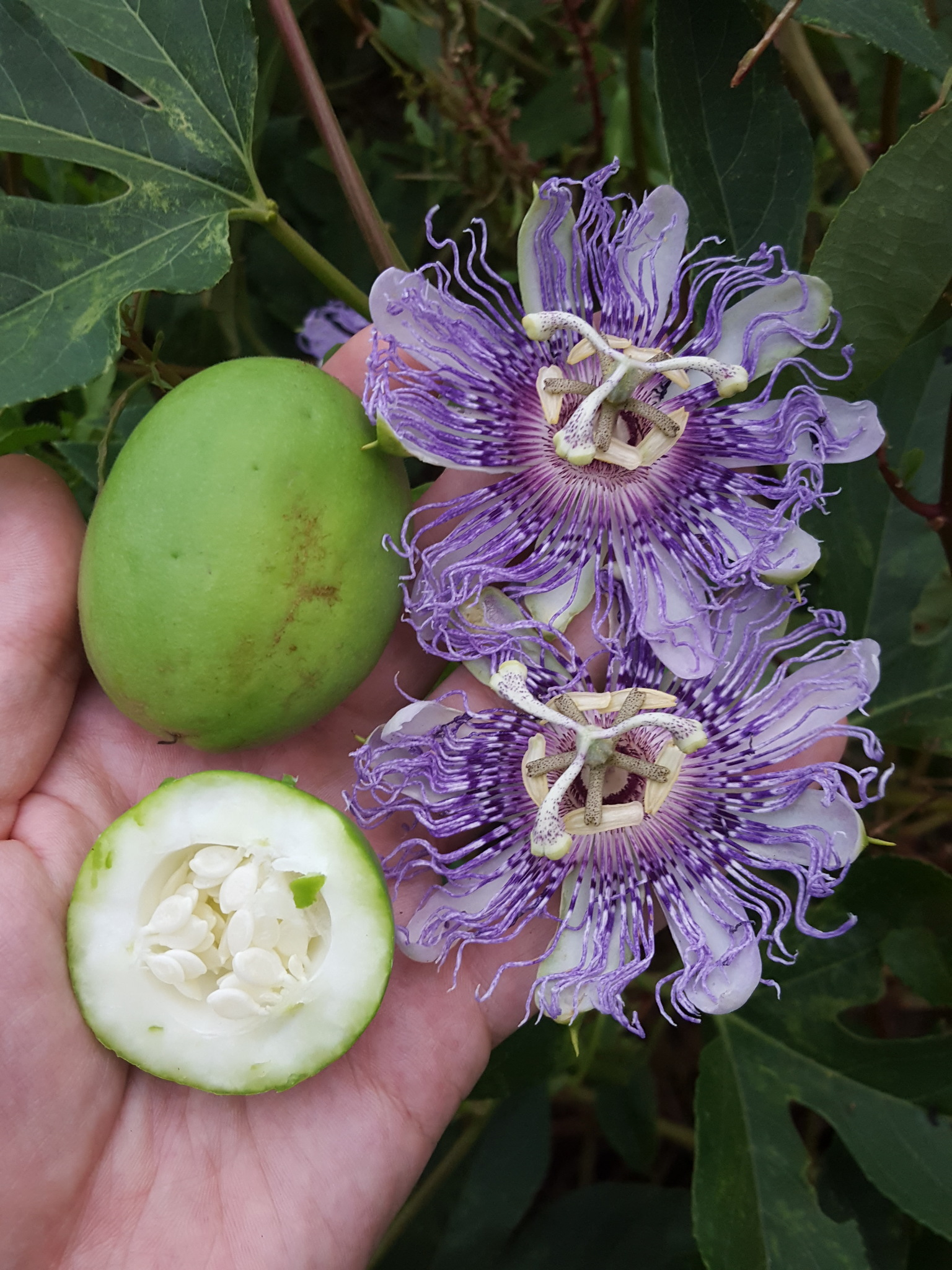
Above: Purple Passionflower blossom and fruit. Source: owenwest33 on iNaturalist.